
There’s a moment many men recognize — not when they first notice something is off, but weeks or months later, when the tiredness has become relentless, the waistline has quietly expanded, and what started as “just feeling a bit run down” has compounded into something they can no longer ignore. Stress, poor sleep, and relentlessly elevated cortisol — the body’s own stress hormone — have usually been laying that groundwork for far longer than the man in question ever suspected. The question isn’t whether men experience health problems. It’s why so many of them wait until exhaustion forces their hand before doing anything about it.
This isn’t a story about symptoms. It’s a story about delay — why men are wired, socialized, and quietly pressured to push past warning signs until the body stops cooperating. Understanding that delay is the first step to breaking it.
How many Men actually Skip Doctor Visits — and What the Data Really Shows
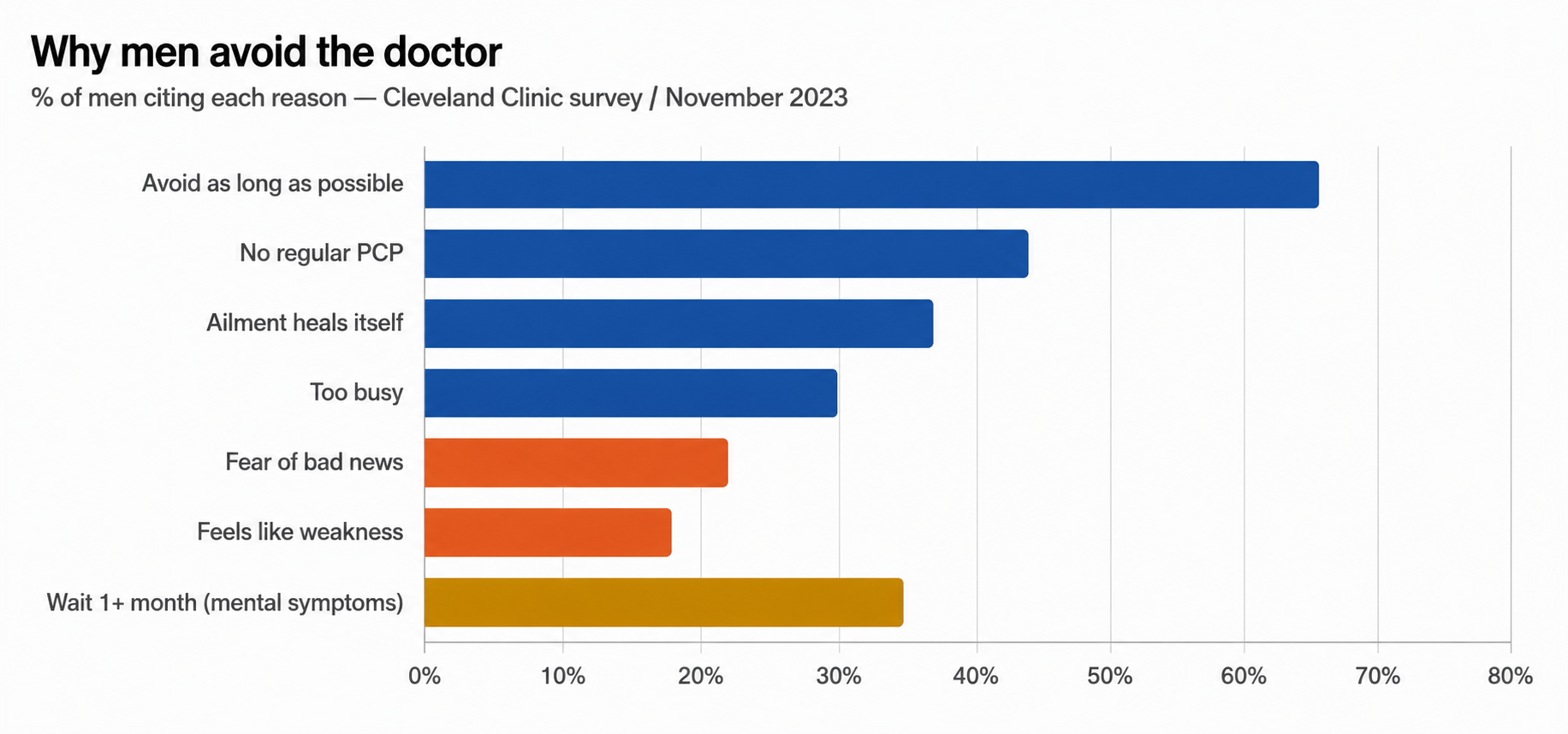
The evidence is hard to dispute. According to research consistently cited across health systems, men are roughly 33% less likely than women to seek medical care. Studies show men are about 50% more likely than women to go over two years without seeing a primary care physician. In one national survey, 72% of men said they’d rather clean the bathroom than schedule a checkup, and 65% admitted they wait as long as possible to see a doctor — even when symptoms persist for weeks.
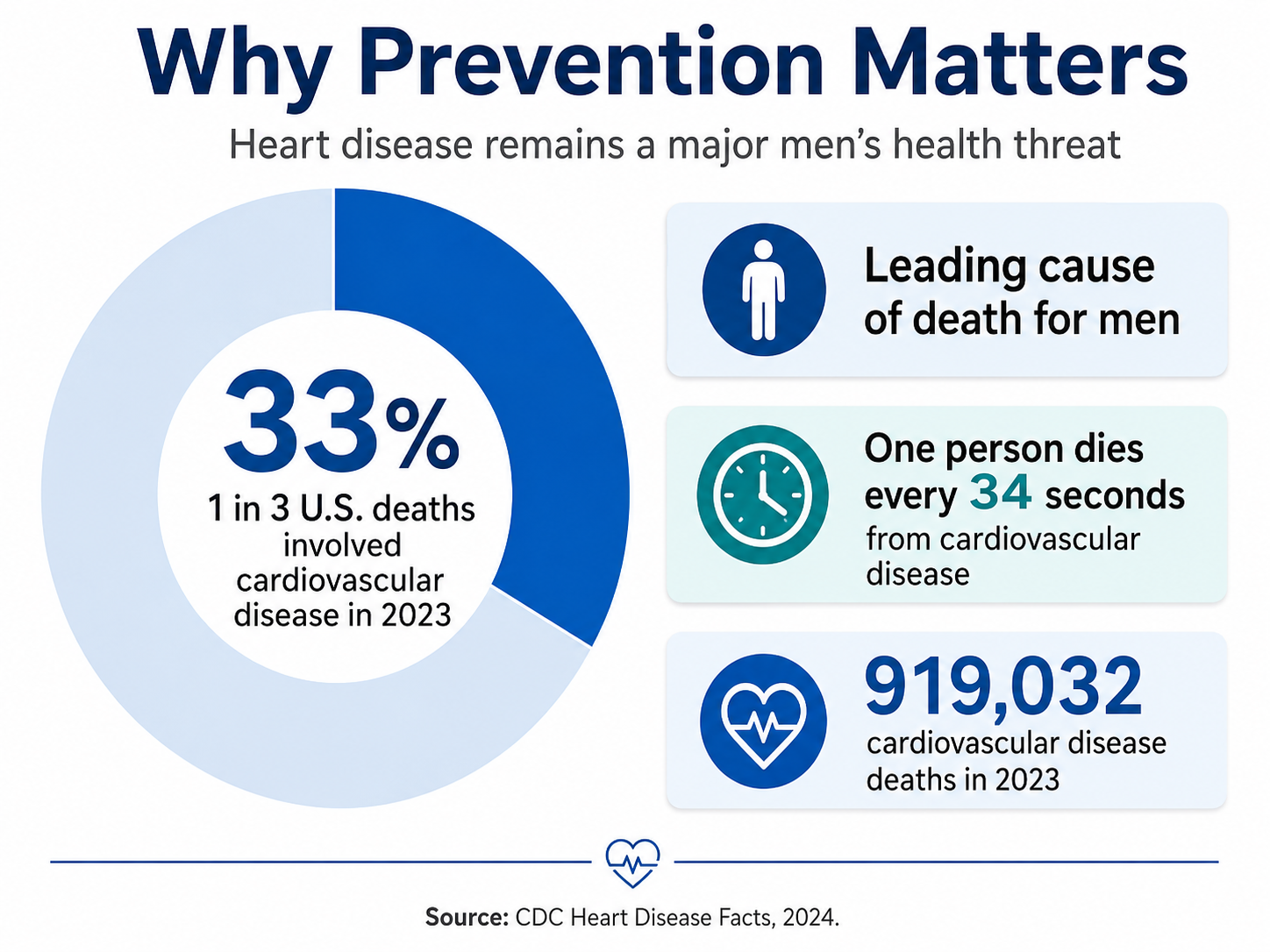
These aren’t quirky statistics. They represent a pattern with compounding consequences. Heart disease remains the leading cause of death in men, accounting for one in every four male deaths. Yet many of the conditions behind that number — high blood pressure, elevated cholesterol, early-stage type 2 diabetes — produce no obvious symptoms until they’ve already progressed past the point of easy intervention.
The result is a population of men who feel reasonably fine right up until the moment they don’t. And by the time they act, manageable conditions have often become urgent ones. Scheduling Annual Men’s Health Checkups before symptoms appear is precisely what makes those conditions catchable — not just treatable.
Why Men Avoid the Doctor: The Psychology of “I’m Fine” and the Culture of Toughness
Busy schedules are the most common excuse men give. CDC data shows that 12.5% of adults reported being too consumed by work or other commitments to seek care. For men, however, this barrier sits on top of something much older and more entrenched: a cultural framework that has, for generations, equated health-seeking with weakness.
Research published in peer-reviewed journals has consistently found that men with more traditional views of masculinity are significantly more likely to skip routine screenings in order to appear self-sufficient. One study found that men who observe their male peers avoiding care — shrugging off injuries, dismissing symptoms — come to treat that avoidance as normal. It becomes what men in their social circle simply do.
This doesn’t make the behavior rational. It makes it deeply human. Social norms shape behavior far more than most people acknowledge, and for many men, the unspoken rule is: unless something is visibly broken, you don’t make a fuss about it.
There’s also a quieter psychological layer. For many men, not knowing genuinely feels safer than knowing. A doctor’s appointment carries the risk of confirmation — that what they’ve been brushing off for months is real and serious. Avoidance, in that framing, is a form of self-protection. Until exhaustion makes it impossible to keep up the pretense.
How Chronic Stress, Elevated Cortisol, and Low Testosterone Quietly Drain Men’s Energy — Not Just Their Waistline
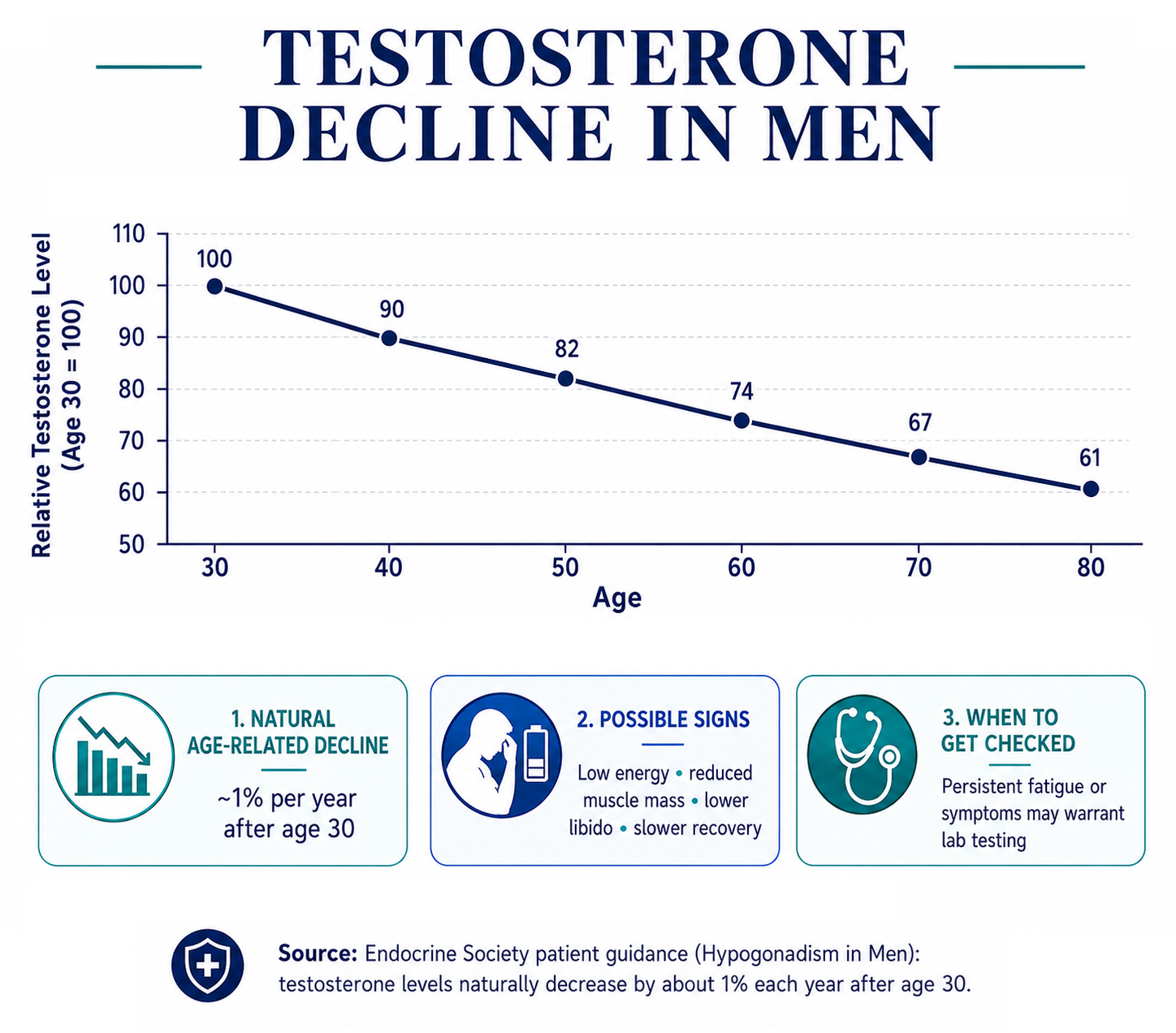
When men avoid care, problems don’t pause — they stack. Nowhere is this more quietly damaging than in hormonal health. Cortisol is useful in short bursts but destructive when chronically elevated. Under sustained pressure, the body treats testosterone production as non-essential, suppressing the hypothalamic-pituitary-gonadal (HPG) axis — the hormonal feedback system that tells the testes to do their job — in favor of keeping the stress response running. Testosterone doesn’t crash overnight. It just quietly steps back.
What follows is a slow erosion most men misread entirely: less drive, poorer recovery, disrupted sleep, mood that sits lower than it used to, a feeling of operating at 70% without knowing why. Men attribute it to age, busyness, or life. Few think to get tested. Fewer still realize the pattern they’re describing has a name — and increasingly, a solution.
A straightforward hormone panel at a TRT Clinic can tell a man in under 48 hours whether his testosterone levels are where they should be for his age. For men experiencing this cluster of symptoms without explanation, searching for ‘low testosterone treatment near me’ is often the first concrete step that actually leads somewhere — because the problem, once identified, is frequently addressable.
Why Men Gain Weight Without Realizing It — And When Medical Support Becomes Necessary
Closely tied to the hormonal picture is the broader weight gain epidemic quietly advancing in men across all age groups. In 2024, over one billion people globally were living with obesity. Among them, obesity-related mortality was actually higher in men than in women — despite obesity being statistically more prevalent in women overall. Research published in JACC shows men face an age-adjusted obesity mortality rate of 3.4 per 100,000, compared to 2.8 per 100,000 for women.
What makes this particularly relevant to men who’ve been avoiding the doctor is that obesity doesn’t arrive with a diagnosis. It builds gradually — accelerated by cortisol-driven fat storage, compounded by poor sleep and declining activity, and normalized by the slow creep of lifestyle drift. Moderately obese individuals lose an average of three years of life expectancy. For severely obese men, that figure can climb to 20 years.
The critical distinction is this: weight that goes unaddressed medically often becomes weight that resists lifestyle intervention alone. The body adapts. Hormones compensate. Hunger signals shift. This is where clinically supervised options — including Phentermine appetite suppressant and Semaglutide weight loss treatment — have demonstrated meaningful results for men who’ve plateaued despite sustained effort.
These are not cosmetic shortcuts; they are metabolic tools deployed within a structured care framework at a weight management clinic, where the root drivers — hormones, insulin sensitivity, inflammation, behavioral patterns — are evaluated alongside the scale.
The behavioral side of weight gain in men also deserves more honest attention than it typically receives. Emotional eating is frequently discussed in the context of women, but research shows men eat in response to stress, boredom, and frustration at comparable rates — they’re simply less likely to recognize it as such. Mindful eating practices that build awareness around hunger cues and stress-driven food choices are not soft wellness suggestions; for many men, they represent the missing piece between repeated attempts and lasting change.
What Finally Gets Men to Take Their Health Seriously — And the Daily Habits That Actually Help
The same body of research that documents male avoidance also points clearly to what disrupts it. More than 80% of men surveyed said their responsibilities to family and loved ones are what ultimately drive them toward healthier behavior. When health stops being about personal vanity or inconvenience and becomes about showing up for the people who depend on them, the motivation shifts in a durable way.
Access to the right tools matters too. Strength training has a well-documented effect not only on body composition but on testosterone levels, metabolic function, and stress resilience. The benefits of sports and regular physical activity extend well beyond how a man looks — they reduce cardiovascular risk, improve insulin sensitivity, and serve as one of the most reliable natural buffers against chronically elevated cortisol.
Practices like the benefits of meditation and deep breathing are increasingly supported by clinical evidence as direct modulators of the stress response. They lower cortisol. They improve sleep quality. They reduce the low-grade physiological alarm state that many men are living in without realizing it. These are not abstract wellness concepts — they are measurable interventions that affect the hormonal environment driving exhaustion.
Hydration rounds out the picture in a way that’s almost frustratingly simple. Chronic mild dehydration impairs cognitive function, mood regulation, and physical energy — all symptoms men routinely misattribute to overwork or aging. It is one of the most overlooked contributors to daily fatigue, and one of the easiest to correct.
The Real Price Men Pay for Waiting Too Long to See a Doctor
Men are built — culturally, emotionally, and in many cases professionally — to push through. To treat discomfort as signal noise. To assume that if they’re still functional, they’re still fine. But the biology of chronic stress and hormonal decline doesn’t pause for that stoicism. High blood pressure does its damage whether a man acknowledges it or not. Low testosterone compounds into a quality of life that erodes quietly rather than collapsing dramatically.
The exhaustion that finally brings a man to a clinic isn’t the beginning of his health problem. It’s almost always the end of a very long middle — years of signals he was too busy, too proud, or too uncertain to act on.
Annual preventive care — a blood panel, a hormone check, an honest conversation with a qualified provider — takes less than an hour. The conditions it can catch or prevent take years to develop and, in some cases, decades to reverse. The system works better when men show up to it before they’re already running on empty. And so do the men in it.
Dr. Robert Fortino’s men’s health programs are built around exactly this kind of early, structured intervention — combining internal medicine, hormone optimization, and performance-based nutrition into a plan that meets men where they are, before the damage compounds further. Health doesn’t reward patience. It rewards action — and the men who take it sooner rather than later are the ones who get to keep more of what matters.