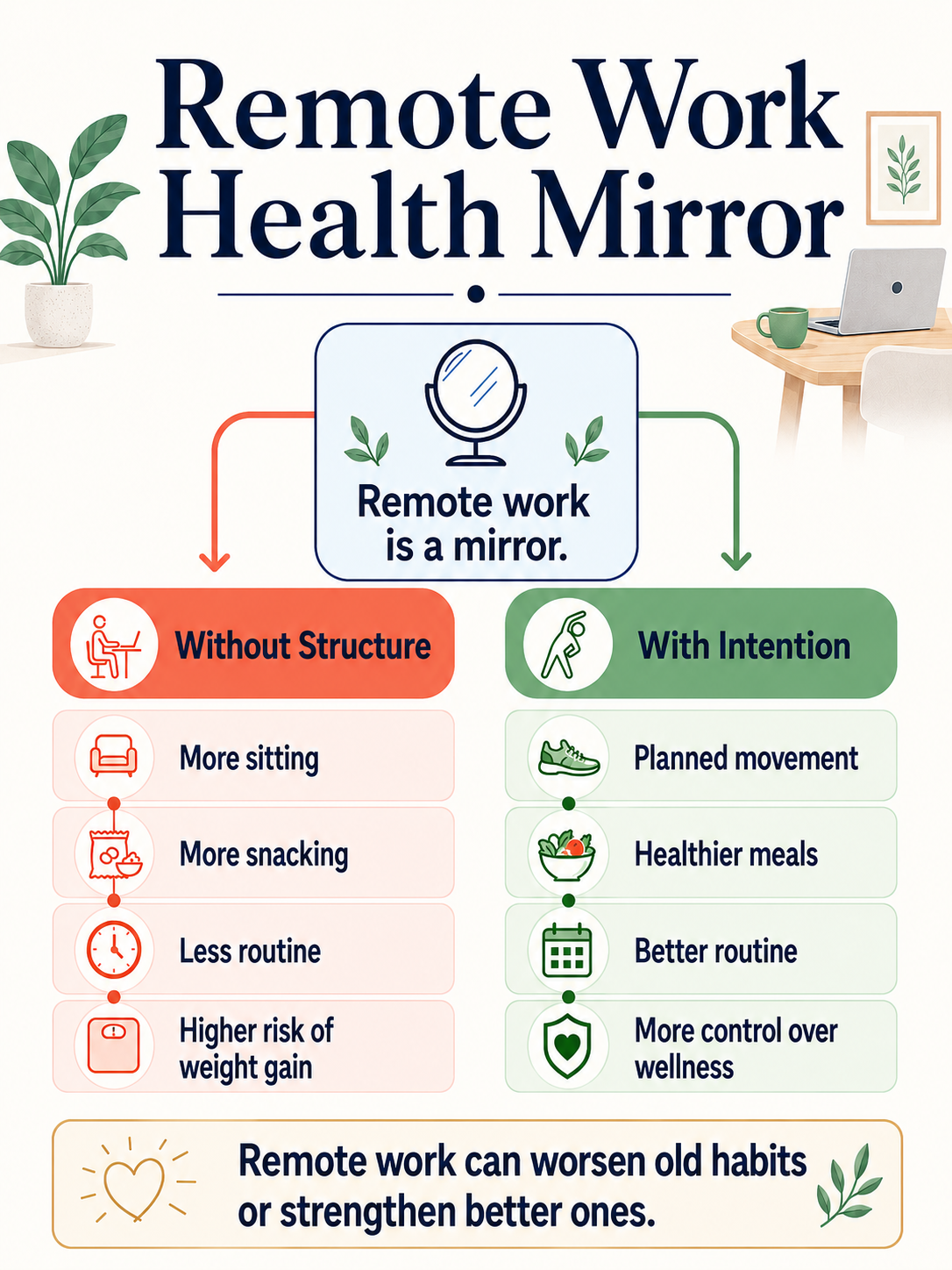

The shift to working from home reshaped not just where we work — but how we move, eat, sleep, and feel. And the data tells a more complicated story than most people expect.
According to Pew Research Center, roughly 22 million employed adults in the U.S. work from home full time — and that shift has changed more than where people open their laptops; it has reshaped how they eat, move, exercise, and manage their daily health.
When the world shifted to remote work in 2020, most conversations focused on productivity, Zoom fatigue, and whether people could actually focus at home. But quietly, a different transformation was underway — one playing out in kitchen pantries, spare bedrooms turned into home gyms, and the afternoon slump that hit right around the time the fridge started calling your name.
More than five years later, remote work has clearly changed how millions of people approach their bodies, their meals, and their daily movement. Some changes have been positive. Others have made weight control harder, especially for people already dealing with stress, low activity levels, poor sleep, or a slow metabolism. Here is what the research actually suggests.
Does Working From Home Make You Sit More and Move Less?
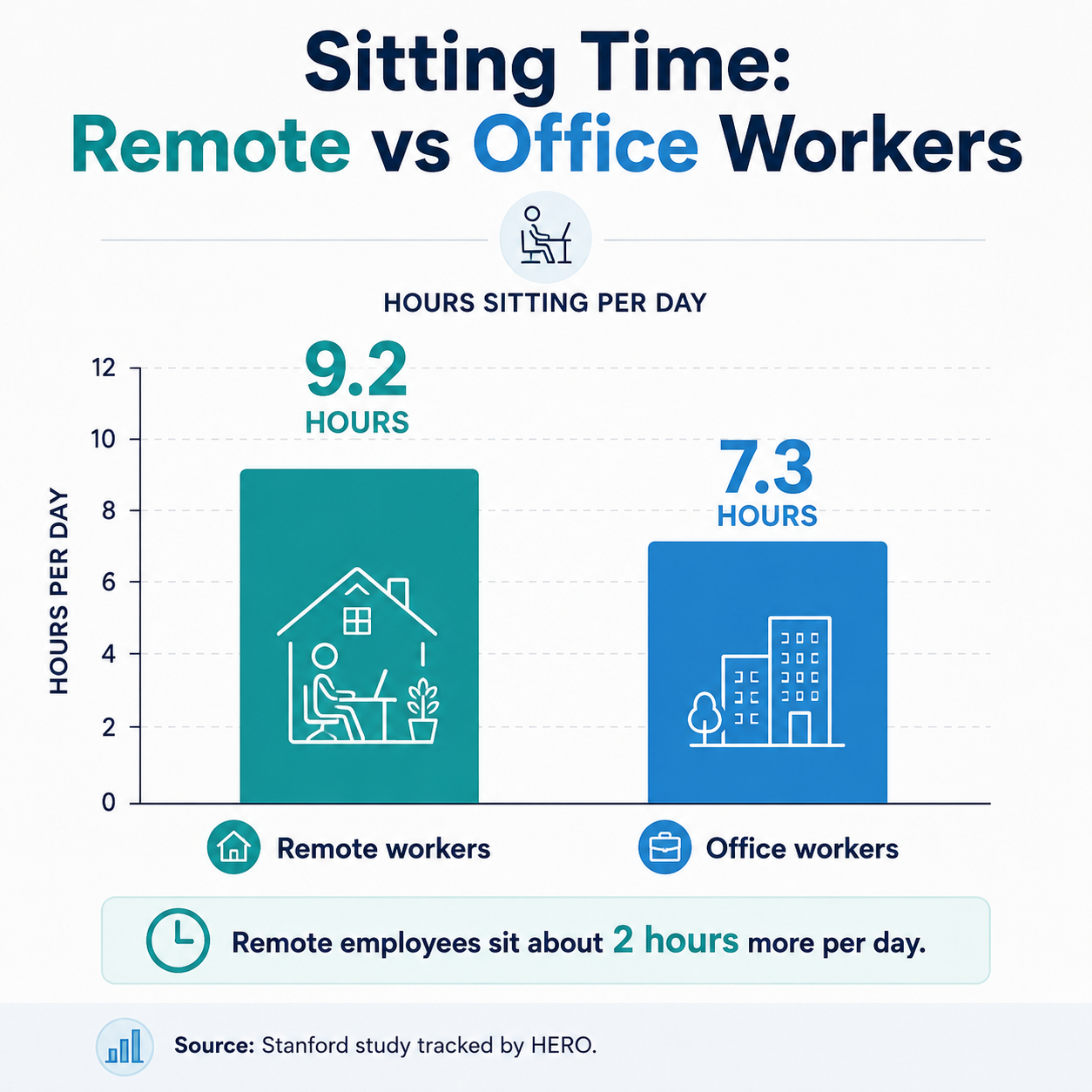
- Here is a number worth pausing on: remote workers sit for roughly two hours more per day than their office-based counterparts. That finding comes from a Stanford University study tracked by the Health Enhancement Research Organization (HERO), which found that fully remote employees averaged 9.2 hours of sitting time daily.
- Research published in BMC Public Health confirmed the broader picture: remote work is associated with the lowest physical activity and the highest sedentary time compared to any other work arrangement…”
What explains this? The short answer is the commute. That 25-minute train ride, the walk to the parking garage, the trudge between meeting rooms — none of it felt like “exercise,” but all of it was movement. Remove it, and the daily step count quietly collapses. The body does not distinguish between purposeful exercise and incidental walking. Either way, it needs both.
The physical consequences are catching up with people.
- A 2024 survey of over 1,000 computer workers found that those who worked from home showed a trend toward increased musculoskeletal pain — particularly new neck and upper back pain — with longer remote working hours and poorer home workstation setups compounding the risk.
How Did Remote Work Change What and How Much We Eat?
The kitchen was always there. Remote work just made it harder to ignore.
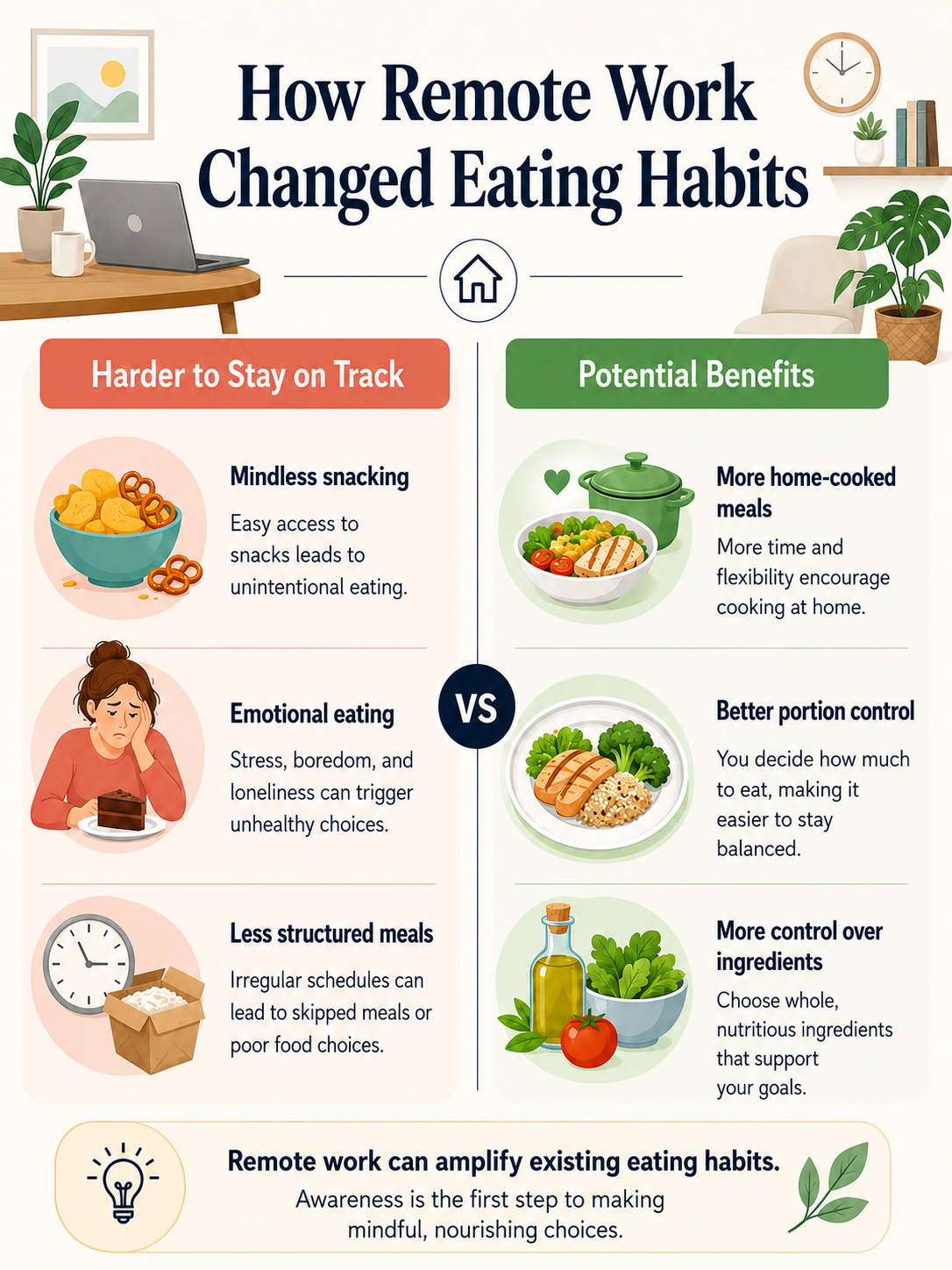
Two forces are pulling in opposite directions. On one side, being close to the kitchen makes mindless snacking and emotional eating much easier. There is no office routine, no set lunch break, and no social cue that says it is time to stop eating and get back to work.
The pantry is only a few steps away all day, and without the natural rhythm of office life, many remote workers end up grazing instead of eating planned meals — often taking in more calories without realizing it.
On the other side, working from home can also support better food choices. Easy access to home-cooked meals gives people more control over ingredients, portions, and meal timing. Research by Wang et al. noted that being closer to home-prepared food can help workers make more intentional choices.
Broader trends support this as well: an analysis of the American Time Use Survey found that the percentage of men cooking at home increased from 36% in 2003 to 52% by 2023, partly as working adults spent more time at home.
The result depends on the person. Remote work does not automatically cause poor eating habits; it amplifies the habits that already exist.
For people without structure, it removes the quiet guardrails the office once provided, which can contribute to weight gain and obesity over time. Because of this shift, demand for weight loss services has increased in the market.
Did Remote Workers Actually Get Fitter Working Out at Home?
One of the most visible changes remote work created was the rise of home fitness. In 2019, many American exercisers still depended heavily on gyms. That changed sharply in 2020 when gyms closed and people began buying resistance bands, dumbbells, treadmills, stationary bikes, and fitness apps. Home workouts became normal almost overnight.
The flexibility argument is real. Without a commute taking 45 to 90 minutes out of the day, remote workers theoretically have more time to exercise. Some people used that time well. They walked before work, lifted weights during lunch, or joined online fitness classes after logging off.
But flexibility without structure often falls apart. Many remote workers are still moving less than their office-based counterparts, not more. The exercise bike bought in 2020 became the world’s most expensive coat rack for many people.
The people who improved their fitness through remote work usually shared one habit: they treated exercise like an appointment. They blocked time, set reminders, and treated a workout the same way they would treat a meeting that could not be skipped.
This matters for both men and women, but the challenges can look different. Some men ignore their health, delay care, push through fatigue, or assume weight gain is just part of aging.
For women, remote work can create a different set of challenges, especially when work, caregiving, meals, stress, and household responsibilities all happen in the same space.
When those demands make healthy routines harder to maintain, a Diet Doctor can help identify the real barriers affecting health, energy, and weight.
Can Loneliness From Remote Work Affect Your Diet and Fitness?
Perhaps the most underreported consequence of remote work on health is not physical — it is social, and it feeds back into both fitness and eating in ways that are only recently becoming clear.
The 2023 State of Remote Work report from Buffer and its research partners found that loneliness was one of the biggest challenges remote workers reported.
Other research has found that people in remote-capable jobs spent more time alone after the pandemic than in-person workers. This matters because loneliness is not just an emotional issue. It can become a physiological stressor.
Low mood, stress and social isolation can reduce motivation to exercise, increase emotional eating, disrupt sleep, and make it harder to stay consistent.
The office was not just a place to work. It was also a place to walk through hallways, bump into colleagues, share lunch, hear casual conversations, and feel socially connected.
Remote work removed much of that ambient contact, and many workers have not fully replaced it. This is where positive self-talk can support behavior change. It will not replace medical care, exercise, or nutrition planning, but it can help people move away from the all-or-nothing mindset that often leads to giving up after one missed workout or one poor meal choice.
Community also matters. Group fitness, walking clubs, recreational leagues, and outdoor activities can help restore the social piece that remote work removed.
It is no surprise that many studies and health experts continue to point out that sports improve overall health by supporting movement, discipline, confidence, and connection.
Is Remote Work Ultimately Good or Bad for Your Health?
Remote work is neither a health disaster nor a wellness breakthrough. It is a mirror.
For workers with strong self-discipline, good home environments, and an existing exercise routine, it has expanded their options — more home-cooked meals, more flexible workout windows, less stress from commuting. For those who thrived on the structure and social scaffolding of office life, it has quietly dismantled the habits that kept them moving and eating well.
The research points toward a few clear actions. Treat movement as scheduled time, not optional. Stock the kitchen deliberately — the default snack on the shelf is the snack you will eat at 3 p.m. Build social connections outside of work to replace what the office once provided informally. And if you work at a desk, get up every 30 minutes. Not for a reason. Just get up.
The commute nobody misses was doing more work than anyone realized.
For people in the Philadelphia area who feel stuck after years of remote work weight gain, a Philadelphia weight loss clinic may help identify whether the issue is lifestyle, appetite, hormones, medication, low activity, or a combination of factors.