

Why do men lose weight faster than women? The answer is not just about effort or discipline.
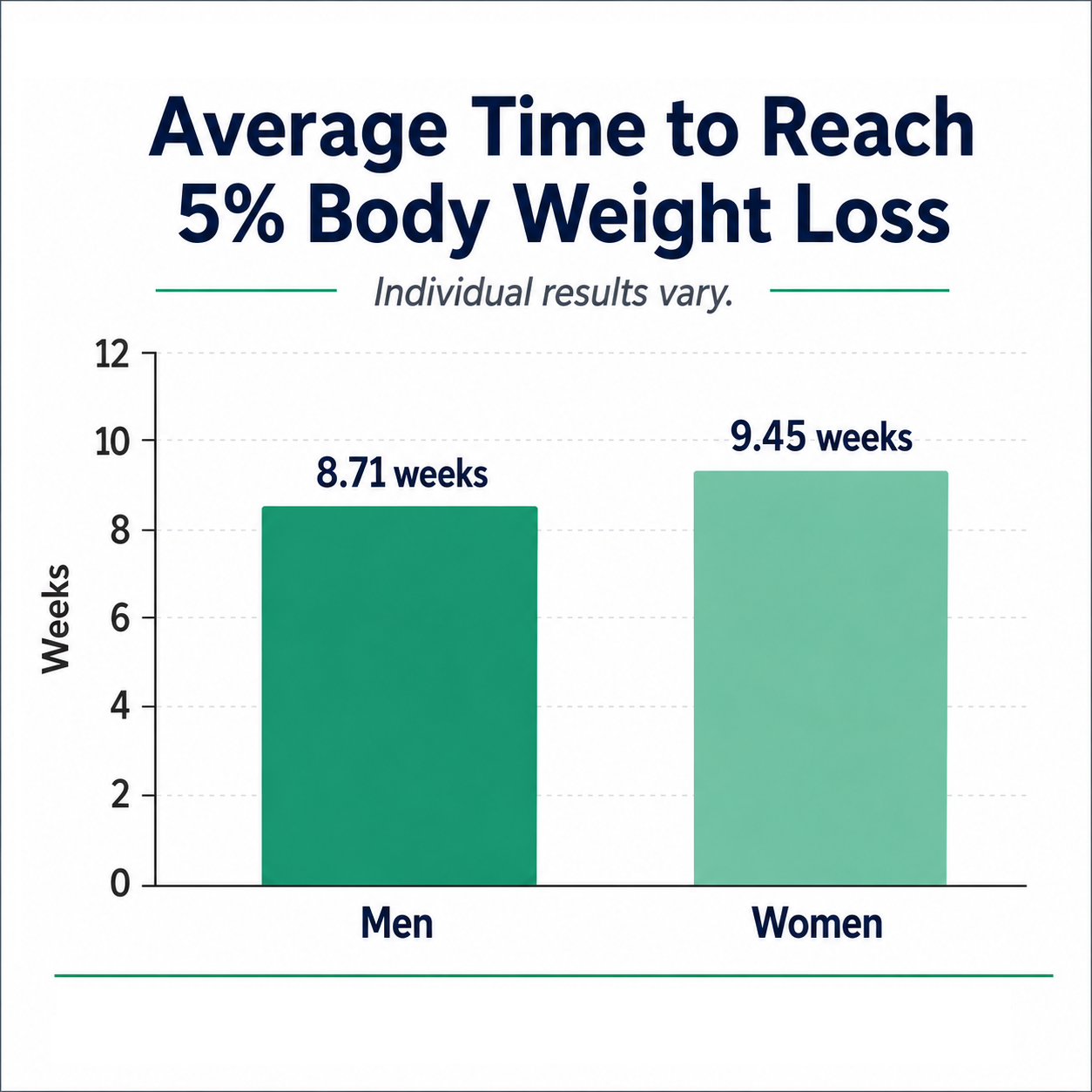
Research shows that men reach a 5% reduction in body weight in about 8.71 weeks, while women take around 9.45 weeks to reach the same goal. This difference usually comes from biology. Men and women have different muscle levels, hormones, metabolism, and fat storage patterns. These differences affect how the body burns calories and loses weight.
When we talk about weight loss for men, it is important to understand that men often start with a few biological advantages. Men naturally burn more calories each day.
On average, men have a basal metabolic rate of about 1,696 calories, while women average about 1,410 calories. Men also usually carry more lean muscle because of testosterone. Women naturally store more fat under the skin because of estrogen and progesterone.
Understanding men vs women losing weight can help people set realistic weight loss goals instead of comparing their progress to someone else’s.
Muscle Mass and Metabolism Advantage
Men naturally have more lean muscle tissue
Men usually have more muscle than women. On average, men carry about 33 kg of muscle, while women carry about 21 kg. Even when body size is considered, men still have a higher muscle percentage.
This matters because muscle burns more calories than fat, even when the body is resting. Each pound of muscle burns about six calories per day at rest, while each pound of fat burns about two calories per day. This gives men a natural advantage when it comes to burning calories and losing weight.
Higher resting metabolism in men
Resting metabolic rate means how many calories your body burns while doing basic functions like breathing, digestion, and keeping your heart beating. Men usually have a higher resting metabolic rate than women. Men average about 1,740 calories per day, while women average about 1,348 calories per day.
Even after adjusting for body size, muscle, fat, and fitness level, men still tend to burn slightly more calories at rest. This is one reason some people may feel they have a slow metabolism, especially if they have lower muscle mass, lower activity levels, poor sleep, or hormonal changes.
Daily calorie burn differences between men and women
Because men often have more muscle, they may burn 500 to 1,000 more calories per day than women. This is one reason men may lose weight faster when both men and women follow the same diet plan.
Muscle also helps the body use blood sugar more efficiently. Since men usually have more muscle, their bodies may process sugar faster and use energy more easily.
Testosterone and Hormonal Differences
How testosterone affects weight loss
Testosterone plays an important role in muscle, fat, and metabolism. It helps support muscle growth and affects how the body stores and burns fat. Men with low testosterone may have more belly fat, lower muscle mass, reduced insulin sensitivity, and more difficulty managing weight.
Studies show that TRT in men with low testosterone may help reduce body fat and protect muscle during weight loss. In one study, men receiving testosterone lost more fat while keeping more muscle compared to men who did not receive it. This is one reason some men with low testosterone may struggle with weight loss even when they are making lifestyle changes.
For men who have symptoms such as fatigue, low motivation, reduced muscle mass, or stubborn weight gain, a medical evaluation for low testosterone treatment may be helpful. This is also why many men look for a metabolic men’s health doctor that can review hormones, lifestyle, nutrition, and overall health together.
How do estrogen and progesterone affect fat storage in women?
Estrogen encourages the body to store fat around the hips, thighs and buttocks, which is common and natural.
After menopause, estrogen levels drop and many women store more fat around the midsection. Progesterone can increase appetite at certain points in the monthly cycle, so hunger may rise and fall from week to week.
A study that followed women through the menopause transition for four years found that abdominal fat increased as estrogen declined. (Lovejoy et al., 2008)
Why do women gain weight during their period?
Most weight gain during a period is water, not fat. In a 2023 study of 42 women, body weight ran about 1 pound higher during menstruation than in the week after, and the increase matched a rise in body water rather than fat. The extra weight passes on its own as the cycle continues.
A separate one-year study found that water retention peaked on the first day of the period. (Kanellakis et al., 2023; White et al., 2011) These normal shifts are one reason our clinical team tracks body composition with a seca scan instead of relying on the scale alone.
Why am I hungrier before my period?
Hunger often rises in the second half of the menstrual cycle, after ovulation. Research suggests estrogen tends to reduce appetite, while progesterone may increase it in some women. Other hormones, including leptin and ghrelin, also affect hunger and fullness, and the effect varies from person to person.(Hirschberg, 2012)
Does menopause cause belly fat?
Menopause is linked to a shift in where the body stores fat. As estrogen drops, many women notice more fat around the midsection, even when their overall weight hasn’t changed much. Body composition testing shows these changes more clearly than the scale, because it measures fat and muscle separately.(Lovejoy et al., 2008)
How can a doctor help with hormone-related weight changes in women?
A physician-led program looks at the whole picture: your cycle or menopause stage, medications, sleep, nutrition and body composition. At Dr. Robert Fortino’s offices in Philadelphia and Turnersville, our clinical team builds a tailored plan with metabolic nutrition education and regular seca body composition checks, then adjusts it as your body changes.
Schedule an evaluation to talk with our team about what’s right for you.How estrogen and progesterone affect fat storage
Women’s hormones also affect weight and fat storage. Estrogen encourages the body to store fat around the hips, thighs, and buttocks. This is common and natural. After menopause, estrogen levels drop. Because of this, many women start storing more fat around the belly.
Progesterone also affects appetite and water retention. During certain times of the monthly cycle, women may feel hungrier and may also notice temporary weight gain from water retention.
Fat Storage Patterns: Belly Fat vs Under-the-Skin Fat
Why men store more belly fat
Body fat is mainly stored in two ways. Subcutaneous fat sits under the skin. Visceral fat sits deep inside the belly around organs like the liver and intestines. Men are more likely to store visceral fat, which is belly fat around the organs. Women, especially before menopause, usually store more fat under the skin around the hips, thighs, and buttocks.
This is why men often have an “apple-shaped” body, while women may have a more “pear-shaped” body.
How fat storage affects weight loss in women
Subcutaneous fat, the fat under the skin, is usually harder to lose in certain areas, such as the hips, thighs, and buttocks. Because women naturally carry more subcutaneous fat, weight loss may be slower or less visible in these areas.
This does not mean women are doing anything wrong. It simply means the body stores and releases fat differently. A thorough weight loss treatment for women should consider hormones, age, activity level, sleep, stress, and body composition instead of using the same plan for everyone.
Why belly fat changes can vary
Visceral fat is the deeper fat stored around the organs. It is more biologically active than fat stored just under the skin, and high levels are linked with greater health risks. Healthy eating, regular exercise, strength training, better sleep, and weight management can help reduce visceral fat over time.
Men often carry more fat around the belly, so they may notice waist changes earlier during weight loss. However, belly fat does not always come off quickly, and results vary from person to person. Visible belly size can also be affected by subcutaneous fat, bloating, posture, water retention, muscle mass, and overall body fat.
What This Means for Weight Loss Treatment
Set realistic expectations
Men may lose weight faster at the beginning of a weight loss program, but long-term success is still challenging for both men and women. The most important thing is not how fast weight comes off in the first few weeks. The real goal is keeping the weight off and improving overall health. A personalized plan works better than comparing results between men and women.
A personalized weight loss service works better than comparing results between men and women. For example, a guide for weight loss for busy men may focus on simple meals, strength training, sleep improvement, stress control, and realistic routines that fit into a packed schedule.
Strength training is important, especially for women
Strength training helps build and protect muscles. This is important because muscle helps the body burn more calories. Women naturally have less muscle than men, so strength training can be especially helpful during weight loss.
It can also support bone health, which becomes even more important with age. Simple strength training two to three times per week can help. Exercises should focus on major muscle groups like legs, back, chest, arms, and core.
Walking can also be a great starting point for many people. While it may not be the only exercise someone needs, walking is the best exercise for many beginners because it is simple, low-impact, and easier to stay consistent with. Activities like recreational sports can also help because Sports improve health by supporting movement, heart health, strength, and motivation.
Protein helps protect muscle
Protein is important during weight loss because it helps the body keep muscle while losing fat. Active women may benefit from about 1.0 to 1.2 grams of protein per kilogram of body weight per day. Older adults may need more protein to support muscle and bone health. It is also better to spread protein throughout the day instead of eating most of it at dinner.
Individual factors matter more than gender
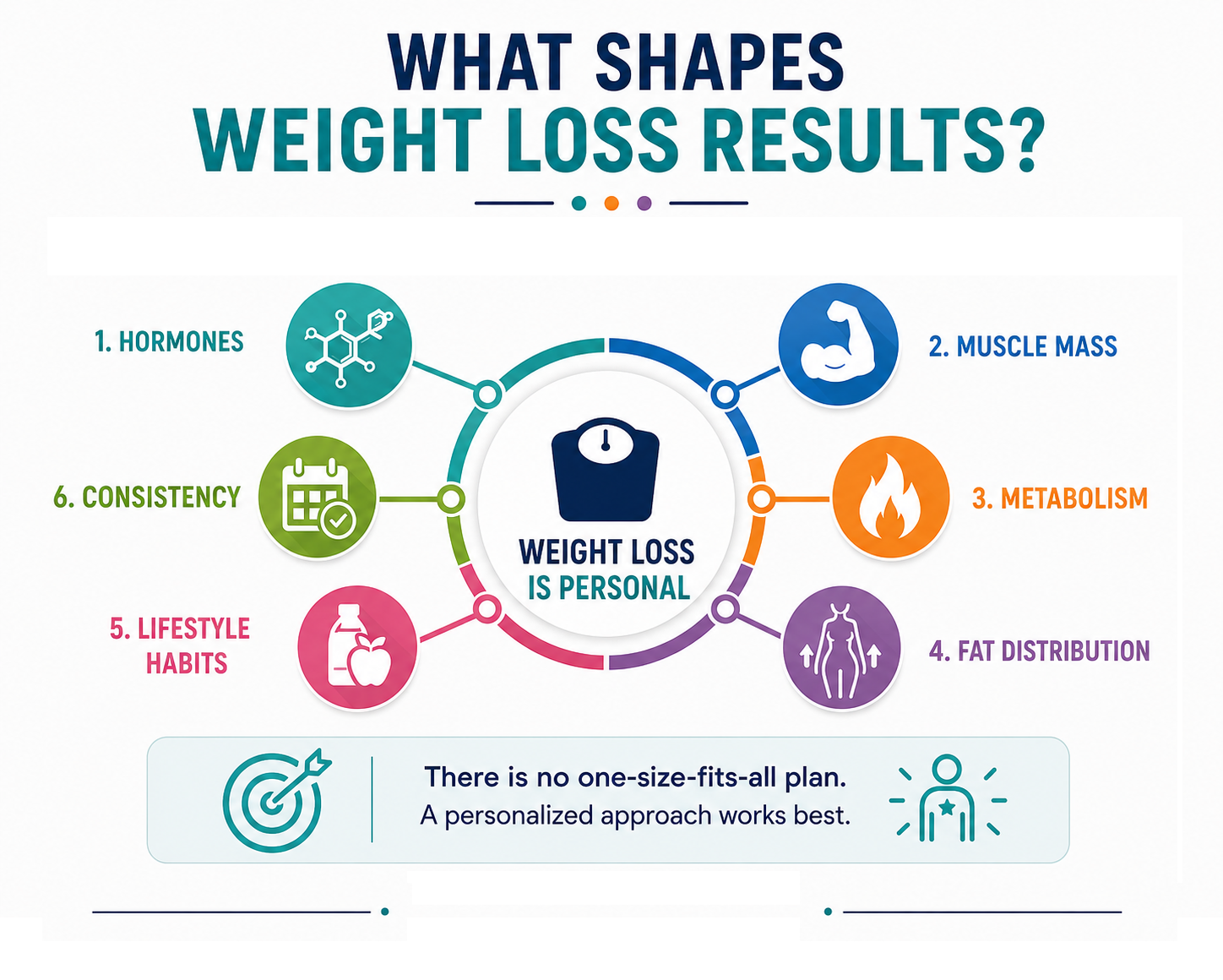
Gender can affect weight loss, but it is not the only factor. Body composition, genetics, age, insulin sensitivity, hormones, sleep, stress, activity level, and medical history all matter. Some people lose weight faster with a higher-protein plan. Others may do better with lower-glycemic foods, more strength training, or medical support.
Mindset also matters. The power of positive self-talk can help people stay consistent when progress feels slow. Instead of thinking, “This is not working,” it may be more helpful to think, “My body is changing at its own pace, and I am building healthier habits.” This is why a personalized weight loss plan is often more effective than a one-size-fits-all approach.
Building a Smarter Weight Loss Plan Based on Your Body
Men often lose weight faster than women because they usually have more muscle, higher testosterone levels, and a faster metabolism. Men also tend to store more fat around the belly, while women may experience slower changes because of hormonal shifts, lower muscle mass, and different fat storage patterns.
But this does not mean weight loss is impossible or that progress is poor.
The key is to focus on the right plan, not comparison. Strength training, enough protein, healthy eating habits, better sleep, stress control, and consistency can help both men and women move toward better health.
At Dr. Robert Fortino’s offices, patients can receive personalized support based on their body, health history, lifestyle, and goals.
His services include medical weight loss, weight loss treatment for men and women, GLP-1 weight loss options, and support for men who may need evaluation for low testosterone or testosterone replacement therapy.
Instead of using the same plan for everyone, Dr. Robert Fortino focuses on a more practical and whole.person approach to help patients make progress safely and realistically. For high protein recipe https://drfortino.net/blog/grilled-chicken-with-cauliflower-rice-and-avocado-salsa/