

For many busy men, weight loss is not just about seeing a lower number on the scale. The real goal is usually more practical: lose belly fat, keep strength, improve energy, fit better in clothes, and feel more confident without looking smaller or weaker.
That is where many diets fail. They focus only on weight loss, not on body composition. A man may lose pounds quickly, but if the plan is too restrictive, low in protein, or missing strength training, some of that weight may come from lean muscle. The better goal is to lose fat while protecting muscle.
This is especially important for men with demanding schedules. Between work, travel, family responsibilities, stress, and limited time for exercise, most men need a realistic plan, not a perfect one. A smart weight loss treatment for men should support fat loss, muscle maintenance, energy, and long-term consistency.
According to the CDC, adult obesity remains a major health issue in the United States. During August 2021 through August 2023, the prevalence of obesity among U.S. adults was 40.3%, and among men it was 39.2%.
Why Muscle Matters During Weight Loss
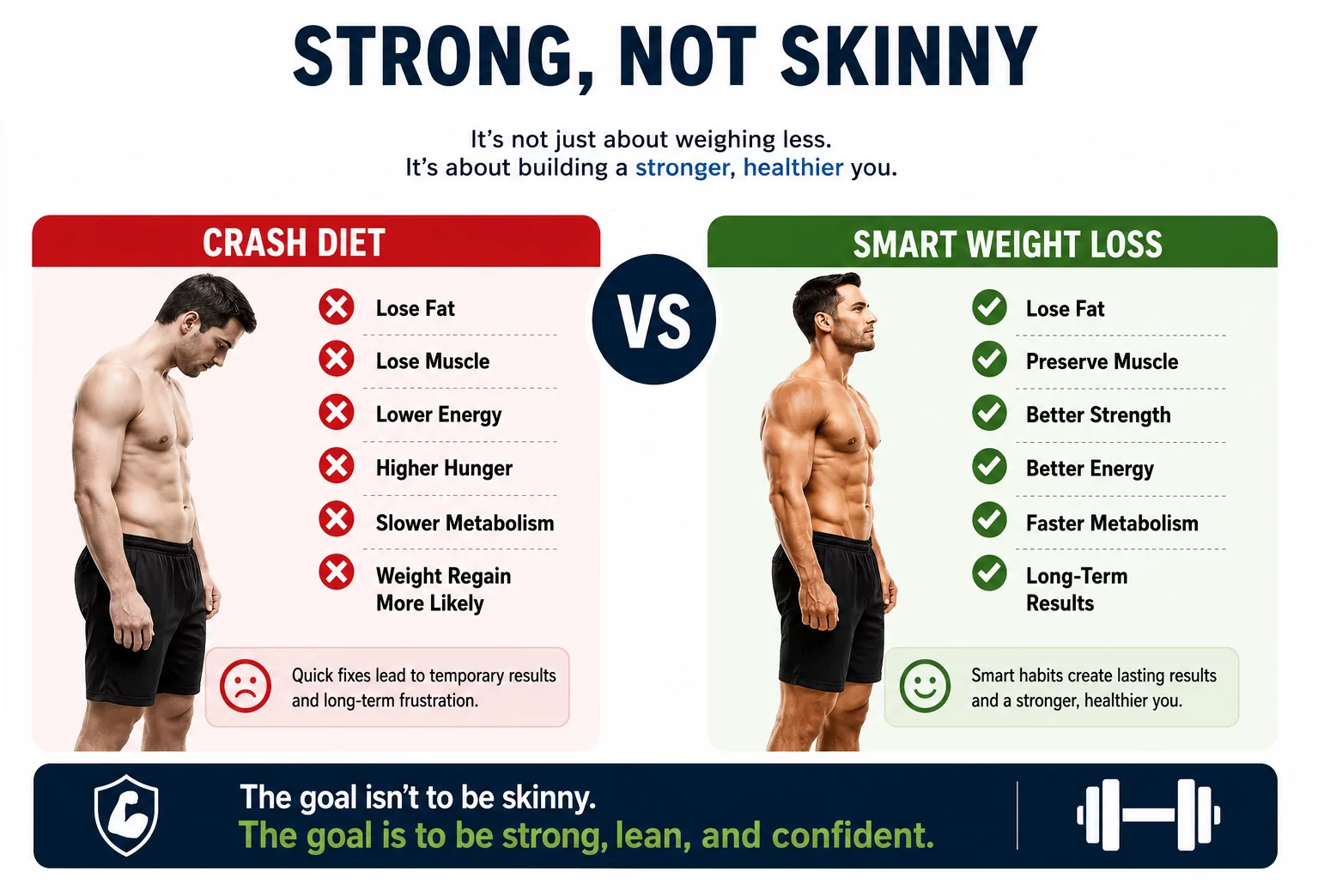
When the body loses weight, it does not automatically lose only fat. Weight loss can include water, stored carbohydrate, fat, and lean tissue. If calories are cut too aggressively or the body does not get enough protein and resistance training, muscle loss becomes more likely.
Muscle matters because it supports daily strength, posture, joint function, blood sugar control, and metabolism. For men, preserving muscle can also help maintain a stronger, healthier appearance during weight loss. This is the foundation of the “Strong, Not Skinny” philosophy — the goal is not just to weigh less, but to become leaner, more capable, and more confident. This is why a medically guided weight loss service should look beyond the scale and consider how the entire body is changing.
Men often notice the problem after crash dieting. The scale drops, but they feel tired, weaker in the gym, and hungrier than before. In some cases, weight comes back because the routine was never realistic. A better plan is slower, stronger, and more sustainable.
Start With a Moderate Calorie Deficit
Fat loss requires a calorie deficit, but that does not mean starving yourself. Busy men often make the mistake of skipping meals during the day and overeating at night. This pattern can increase cravings, reduce workout quality, and make it harder to control portions. When the quality of food improves, the quantity naturally becomes easier to manage.
A moderate calorie deficit works better for most men because it supports consistency. Instead of removing entire food groups or following a very low-calorie diet, start by improving the basics:
- Choose lean protein at every meal.
- Replace sugary drinks with water or unsweetened beverages.
- Reduce fried foods and oversized portions.
- Eat vegetables first before taking another serving.
- Keep healthy, high-protein snacks available during work hours.
This kind of structure is easier to repeat. A busy man does not need a complicated diet; he needs a reliable system. For men who have tried multiple diets without lasting success, working with a weight loss doctor can help identify the right approach based on medical history, appetite patterns, medications, lab results, and lifestyle.
Protein Is Your Muscle Protection Tool
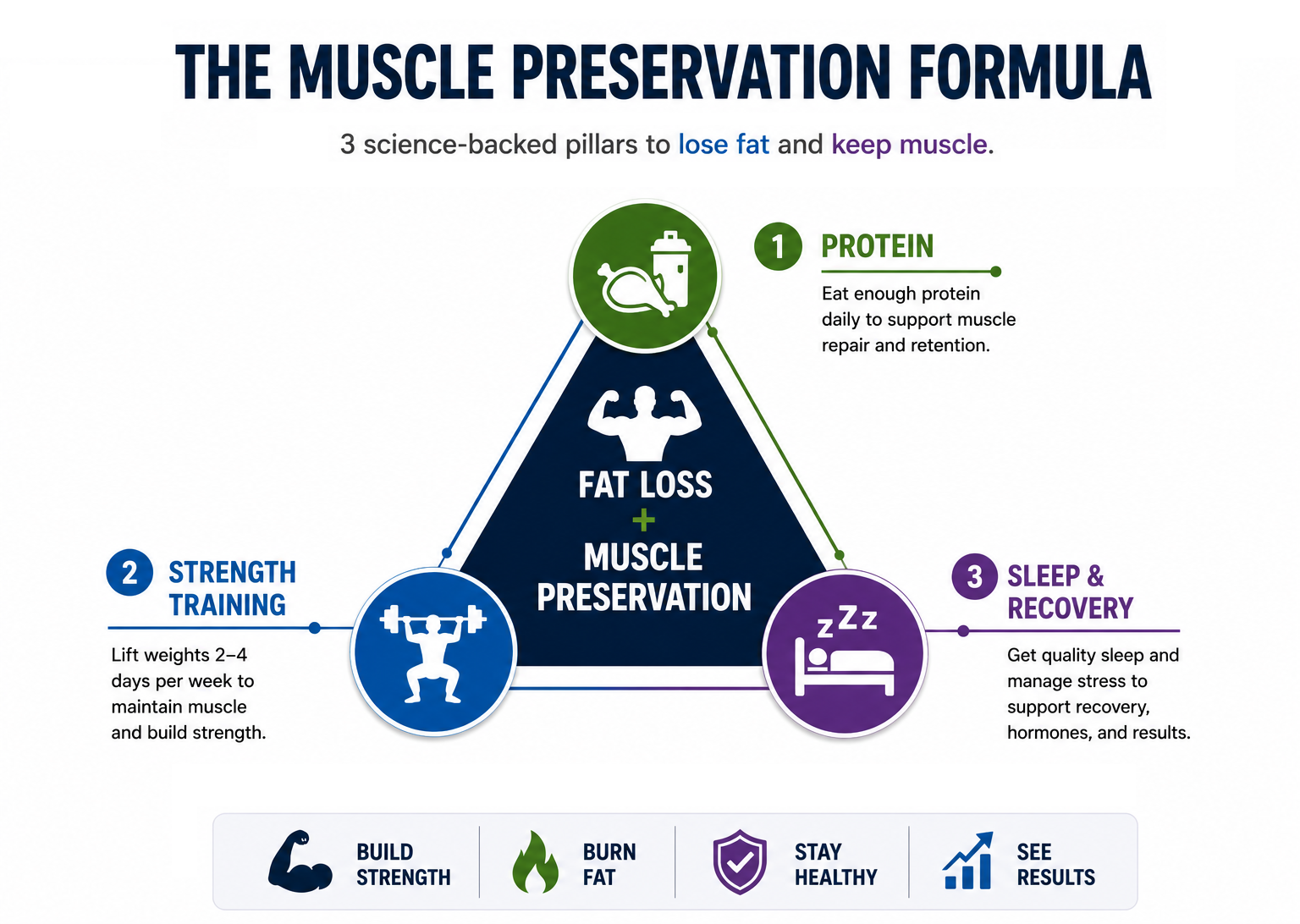
Protein is one of the most important nutrients during fat loss because it supports fullness and helps preserve lean muscle. The International Society of Sports Nutrition states that many exercising individuals benefit from daily protein intake in the range of 1.4 to 2.0 grams per kilogram of body weight, and higher intake may be useful during calorie restriction when the goal is to maintain fat-free mass. https://pubmed.ncbi.nlm.nih.gov/28642676/
For a busy schedule, the easiest strategy is to include protein at every meal. Good options include eggs, Greek yogurt, cottage cheese, chicken, turkey, fish, lean beef, tofu, lentils, beans, and protein shakes. The best choice depends on food preferences, health history, and daily routine.
A simple meal formula:
- Protein first
- Vegetables second
- Fiber-rich carbs third
- Healthy fats in measured portions
For example, breakfast could be Greek yogurt with berries, eggs with vegetables, or a protein smoothie. Lunch could be grilled chicken salad, turkey wrap, tofu bowl, or salmon with rice and vegetables. Dinner could include lean protein, vegetables, and a controlled portion of potatoes, beans, or whole grains. This approach is not about depriving the body — it is about fueling it with the right foods so fat loss happens naturally and consistently.
Strength Training Tells the Body to Keep Muscle
If protein provides the building material, strength training provides the signal. During weight loss, resistance training tells the body that muscle is still needed. The CDC recommends that ‘adults get 150 minutes of moderate-intensity physical activity each week and at least 2 days of muscle-strengthening activity’. For men trying to lose fat while staying strong, strength training should not be optional. A full-body workout two to four days per week can be enough when done consistently.
Focus on major movement patterns, including squat or leg press, hip hinge movements such as Romanian deadlift or hip thrust, push movements such as push-ups or chest press, pull movements such as rows or lat pulldowns, and core movements such as planks or loaded carries.
Research on healthy muscle preservation during weight loss suggests that resistance-type exercise can help reduce or prevent weight-loss-related muscle loss. You do not need to train like a bodybuilder. You need a plan you can repeat. A 30-minute workout done consistently is better than a 90-minute plan that only happens once a month.
Use Cardio Wisely
Cardio can help with heart health, endurance, and calorie burn, but it should not replace strength training. Many men rely only on cardio and then wonder why they feel smaller, weaker, or constantly hungry. Walking is one of the easiest fitness habits a busy man can adopt. It does not require equipment, can be done almost anywhere, and is easier to recover from than intense workouts. You can walk during phone calls, after lunch, after dinner, or before work.
Other good options include cycling, elliptical training, incline treadmill walking, or short interval sessions once or twice per week. The purpose of cardio is to support your plan, not punish yourself for eating.
Sleep, Stress, and Stubborn Fat
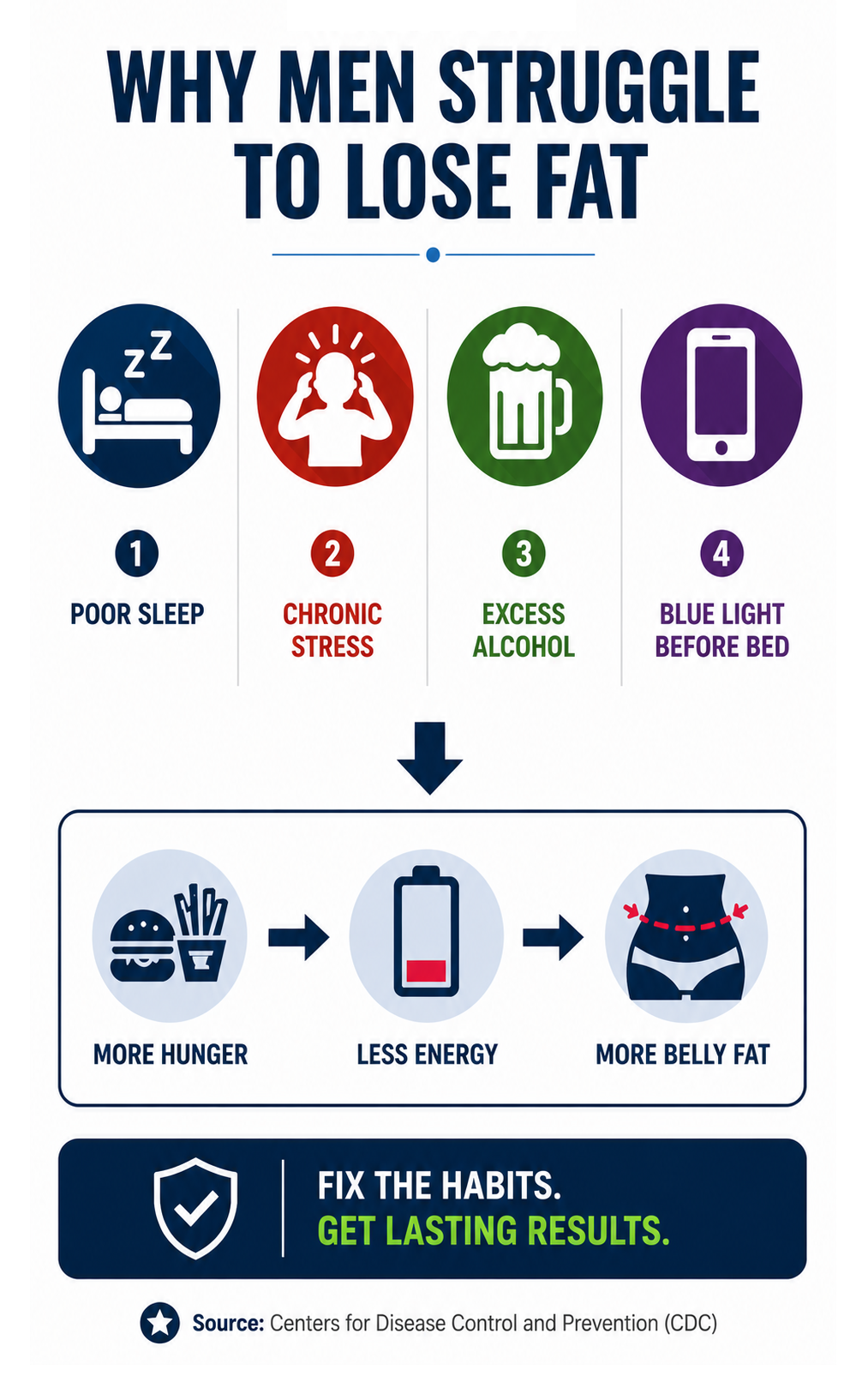
Many busy men underestimate the impact of sleep and stress on their progress. Poor sleep increases cravings, reduces workout motivation, and makes it harder to manage hunger throughout the day. Similarly, chronic stress can push men toward late-night snacking, alcohol, fast food, or oversized meals, all of which quietly work against fat loss goals. These internal factors matter more than most people realize.
Sleep quality and duration directly affect how well a man can follow his nutrition and training plan. On top of that, blue light from late-night screens can interfere with winding down before bed, making quality sleep even harder to achieve. Over time, the link between stress and stubborn fat becomes a real concern for men dealing with constant pressure at work and home.
Fortunately, a few simple changes can make a noticeable difference. Setting a consistent bedtime most nights helps regulate sleep patterns, while avoiding heavy meals close to bedtime supports better rest. Limiting alcohol during the week, taking a short walk after stressful workdays, and keeping high-calorie snacks out of easy reach are all small but effective habits. Practicing mindful eating instead of rushed eating also helps the body recognize fullness more reliably. These habits do not replace diet and exercise, but they create the right conditions for both to work more effectively.
What About Hormones and Low Energy?
Men who feel unusually tired, have low motivation, increased belly fat, reduced strength, or low libido may wonder whether hormones are playing a role. Testosterone levels can affect energy, muscle, mood, and body composition, but symptoms should always be evaluated medically rather than guessed.
Dr. Robert Fortino has decades of experience in testosterone replacement therapy and can help assess whether low testosterone is present and whether treatment is the right step. TRT is not a shortcut for weight loss, but for properly diagnosed men, it may be one part of a broader health plan that includes nutrition, resistance training, sleep, and medical monitoring. The key is proper testing and supervision.
A Simple Nutrition System for Busy Men
Busy men need fewer decisions, not more. The easier the system, the more likely it is to work. The goal is not to count every calorie but to build consistent habits around high-quality food that fuels the body and supports fat loss.
Try this structure:
Breakfast: protein plus fiber (such as eggs with spinach and fruit)
Lunch: lean protein, vegetables, and controlled carbs (such as grilled chicken bowl with vegetables and rice)
Snack: protein-rich option if needed (such as protein shake or cottage cheese)
Dinner: protein, vegetables, and a reasonable starch portion (such as fish, roasted vegetables and potatoes)
Drinks: mostly water, black coffee, or unsweetened tea
This plan is flexible enough to work whether you eat at home, order lunch at work, or travel frequently. If you are preparing for a major event, such as a wedding, avoid crash dieting. A better approach is to start early, protect muscle with adequate protein and strength training, and follow a plan that will still make sense after the event is over.
Track the Right Progress
The scale is useful, but it is not the full story. If you do strength training, eat enough protein, and lose fat gradually, your body may change significantly even when the scale moves slowly. This is because muscle and fat can shift at the same time, making the number on the scale an incomplete measure of real progress. Focusing only on weight can be discouraging and may cause men to abandon a plan that is actually working.
A more complete picture comes from tracking multiple markers together. Waist size is one of the most reliable indicators of fat loss, particularly around the abdomen where health risks are highest. Progress photos taken every two to four weeks can reveal changes that are easy to miss day to day. Strength improvements in key exercises show that muscle is being maintained or built. Energy levels, sleep quality and duration, and how clothes fit are also meaningful signs that the body is responding well. For men with underlying health concerns, tracking blood pressure or relevant lab markers with medical guidance adds an important layer of accountability.
For men managing high blood pressure or other health conditions, medical supervision is especially important. Weight loss can support better overall health, but the approach should always be safe and tailored to the individual. Rapid or extreme methods may do more harm than good in these cases.
It is also worth remembering that progress is rarely linear. There will be weeks where nothing seems to move, followed by noticeable shifts. Staying consistent through those slower periods is often what separates lasting results from short-term ones. A man who loses inches from his waist, maintains his strength, and feels better day to day is making excellent progress, regardless of how slowly the scale moves.
Do Women Need a Different Approach?
Although this guide focuses on men, many principles also apply to women: adequate protein, strength training, sleep, movement, and medical guidance when needed. A weight loss service for women is built around hormones, age, pregnancy history, menopause, thyroid health, and personal goals.
Women also tend to respond differently to calorie restriction and stress, which means the timing, intensity, and structure of a plan may need to be adjusted accordingly. The main message is the same: sustainable weight loss should protect health, not just reduce scale weight.
A Practical Weekly Plan
Here is a realistic starting plan for busy men:
- Strength training: 2–4 days per week
- Walking or cardio: 20–30 minutes most days
- Protein: every meal
- Vegetables: at least 2 meals per day
- Sleep: consistent bedtime routine
- Alcohol: limited during the week
- Progress check: weight and waist once weekly
This plan is simple enough to follow, but strong enough to create real change. It also helps to break the cycle behind the weight gain epidemic: quick diets, short-term results, muscle loss, regain, and frustration.
Final Takeaway
Busy men can lose fat without sacrificing muscle, but the strategy needs to be smart. The “Strong, Not Skinny” approach means building a body that is leaner, stronger, and healthier — not just lighter. Avoid crash diets. Do not rely only on cardio. Do not skip protein. Focus on food quality, strength training, daily movement, better sleep, and medical support when needed. A trusted GLP-1 weight loss center can help eligible patients explore advanced options while keeping the focus on long-term health, lean muscle, and sustainable results.
The goal is not just to lose pounds. The goal is to become leaner, stronger, healthier, and more confident. If you are ready to lose fat while protecting muscle and energy, Dr. Fortino’s medically supervised weight loss programs can help you build a personalized plan based on your body, lifestyle, and goals. With two conveniently located weight loss centers, one in Philadelphia and one in South Jersey, Dr. Robert Fortino and his team are accessible to men across the region who are ready to make a lasting change.