
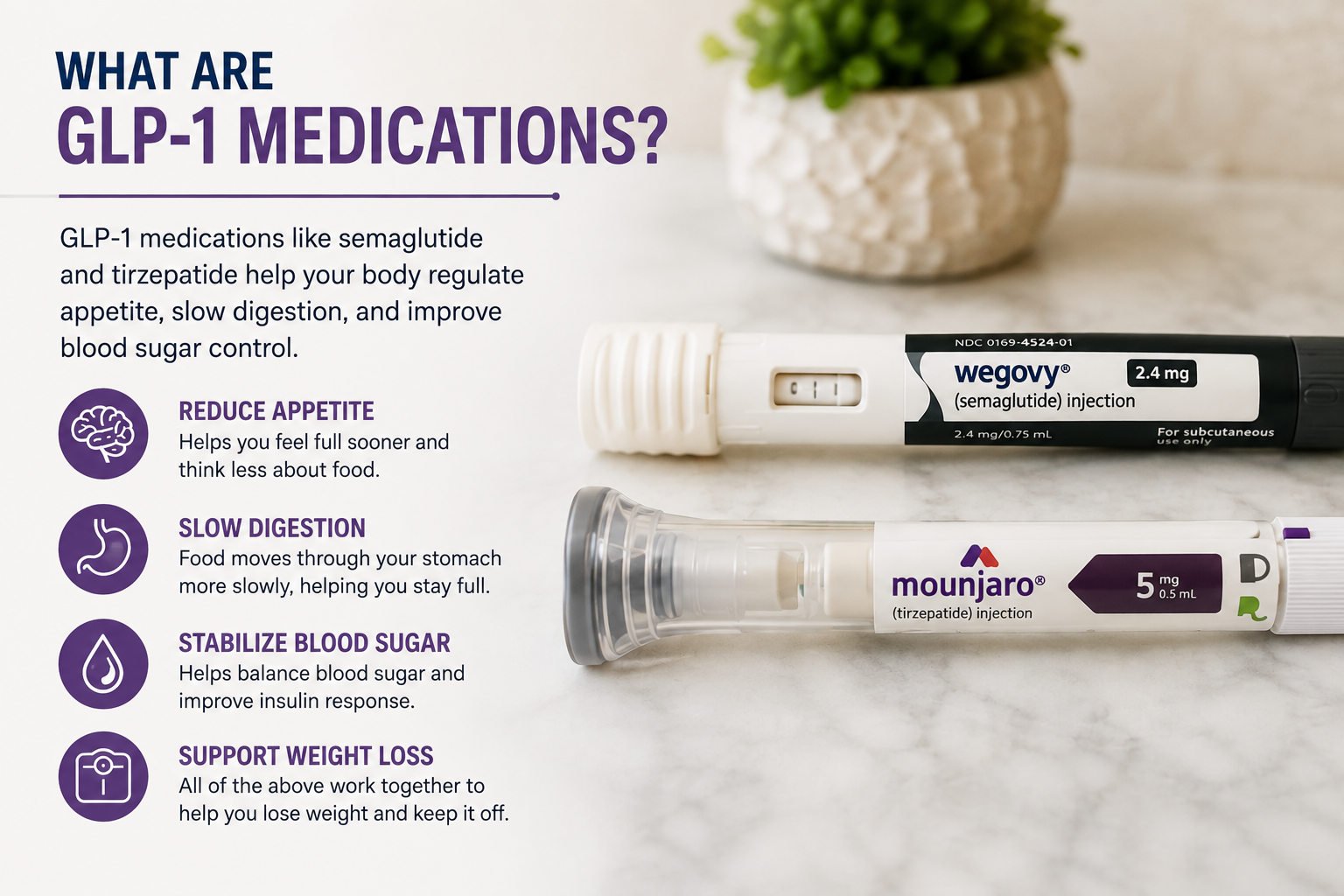
GLP-1 medications like semaglutide and tirzepatide are some of the most effective tools we have in medical weight loss.
But how they’re prescribed and managed makes all the difference.
I believe these medications can be life changing for anyone struggling with food addiction and metabolic dysfunction. They make you think less about food, feel full sooner, and slow how quickly food moves through your gut. Some of my patients have told me they feel “free of the food noise” in their heads. That leads to better food choices, better meal planning, and a better quality of life.
But a prescription alone isn’t a plan. Over nearly three decades of practice, I’ve developed a specific approach to these medications: how I evaluate candidates, run labs, adjust dosing, manage side effects, and support patients for the long term.
Here’s how I do it, and why.
Before I talk about how I use them, it helps to understand what these medications are and how they work. I explain this to every new patient, because when you understand what’s happening in your body, the whole process makes more sense.
How GLP-1s Work
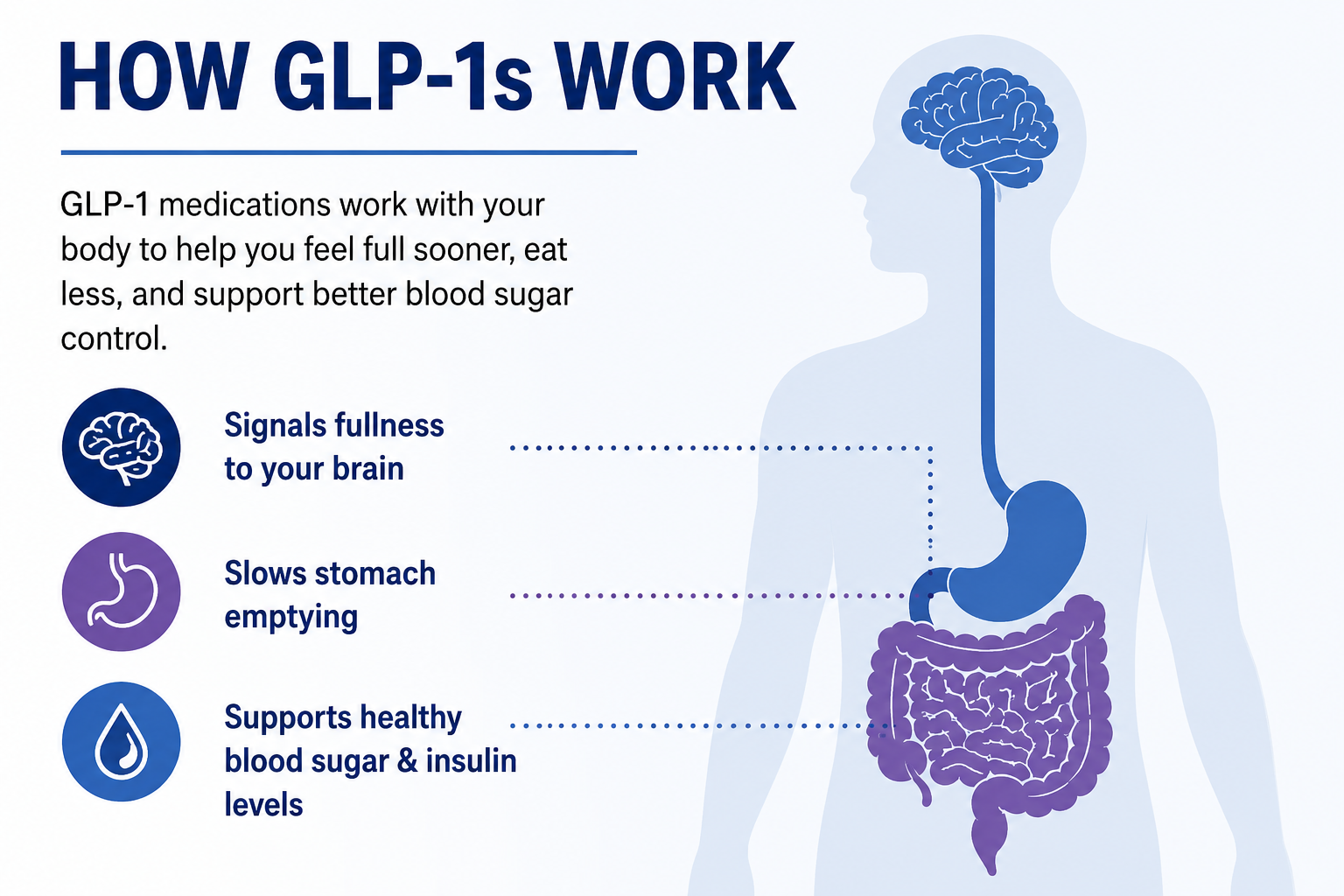
GLP-1 stands for glucagon-like peptide-1. It’s not something foreign. It’s a hormone your body already makes, in cells called L-cells down in your small intestine and colon. Its job is to help manage your blood sugar and tell your brain you’re full after a meal.
How Semaglutide Works
Semaglutide, which you may know as Wegovy or Ozempic, connects to your GLP-1 receptors. Those receptors are all over the body, in your nervous system, your heart, your gut, your pancreas. When the medication stimulates them, you feel full sooner, food moves through your stomach more slowly, and your blood sugar and insulin stay steadier.
How Tirzepatide Works
Tirzepatide, known as Mounjaro or Zepbound, goes one step further. It’s a dual agonist, working on two receptors instead of one: GLP-1 and a second hormone called GIP (glucose-dependent insulinotropic polypeptide). For the right patient, that second pathway can make a real difference.
What We’re Really After
Whichever medication we use, the goal is the same. I want fewer blood sugar and insulin spikes, better insulin sensitivity, and relief from that constant pull toward food. That’s what makes lasting change possible.
How I Decide If a GLP-1 Is Right for You
Not everyone who walks in should walk out with a prescription. Before I ever recommend a GLP-1, I need a full picture of your health. That starts with a real conversation and a thorough workup, not a quick online form.
A Complete Health History
I take a full history from every patient: your medical background, current medications, allergies, family history, surgical history, and more. I also look at your social and psychological history, because your relationship with food and the stresses in your life matter just as much as your lab numbers.
A Hands-On Exam
Then comes a comprehensive physical exam. I check your blood pressure, heart rate, body weight, body fat percentage, and abdominal circumference. These numbers give me a baseline and help me understand your metabolic health before we start anything.
A Plan Built With You, Not For You
Just as important, I want to understand your goals. Together, we build a plan that’s realistic for you to actually accomplish. If a GLP-1 makes sense and you decide it’s right for you, I walk you through the benefits, the dosing, the possible side effects, and what monitoring looks like, so you can give truly informed consent.

The Bloodwork I Run Before We Start Your GLP-1 Treatment
Good weight loss care is built on data, not guesswork. Before we begin, I want a clear look at what’s happening inside your body. Bloodwork gives me that, and it lets me track your safety and progress once you’re on treatment.
The Baseline Tests
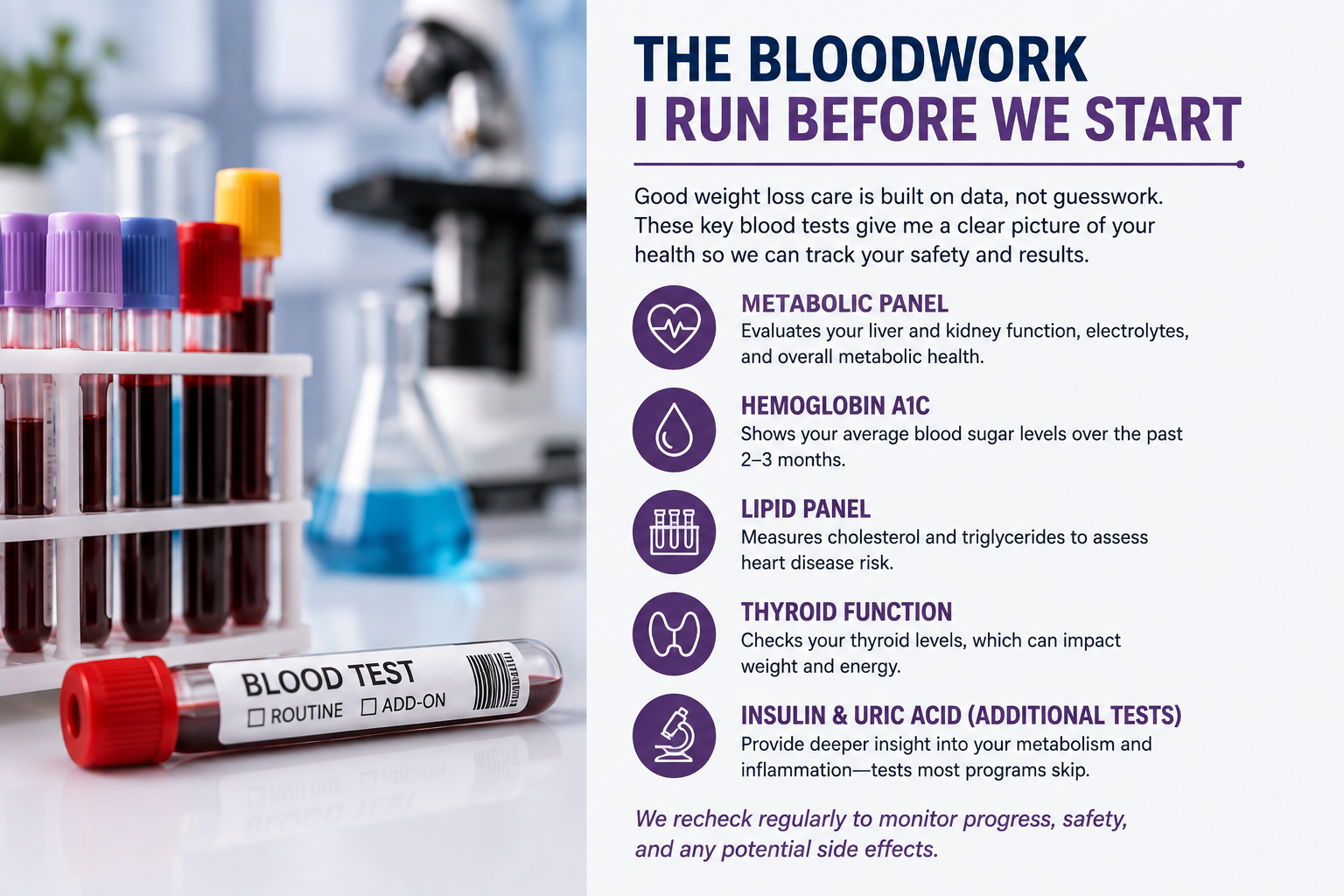
Most patients already get a yearly physical and bloodwork from their primary doctor. That usually covers a metabolic panel, Hemoglobin A1c, a lipid panel, a complete blood count, thyroid function, and a urinalysis. These give me a solid starting picture of your overall health.
The Two I Add
Beyond the standard panel, I also check your serum insulin level and your serum uric acid level. Most programs skip these. To me, they’re a window into your metabolic profile, and they often tell me more about what’s driving your weight than the routine numbers do.
Why I Keep Checking
Bloodwork isn’t just a one-time gate at the start. I recheck it while you’re on a GLP-1 to gauge how well it’s working, catch any side effects early, and make sure the medication is safe for you as your body changes.
How I Handle GLP-1 Dosing
This is where my approach differs most from the standard playbook. A lot of programs raise your dose on a fixed schedule, higher every four weeks, almost automatically. I don’t work that way. I dose based on how you’re actually responding, not the calendar.
I Start Low
Every patient starts at a low dose. That gives your body time to adjust and lets me watch for any side effects. If that starting dose is working and you’re tolerating it well, there’s often no reason to change it. Some of my patients get excellent results at lower doses and stay there.
I Aim for the Lowest Effective Dose
My goal isn’t the highest dose. It’s the lowest dose that keeps you losing fat steadily while feeling good. More medication isn’t automatically better, and pushing the dose up when you don’t need it just invites side effects. I’d rather find the amount that works for your body and hold there.
Why I Don’t Increase Automatically
When I do consider raising a dose, I’m asking a few questions first. Is your appetite well controlled? Are you losing weight? Is your blood sugar where it should be? If those are on track, passing the four-week mark isn’t a reason to go up on its own.
How I Handle Side Effects Along the Way
Side effects factor into every dose decision. If they’re mild and passing, that’s usually not a reason to stop. I’d rather hold you at your current dose a little longer, manage the symptoms, and reassess once they settle. But if side effects are persistent or significant, that’s a clear signal to wait before going any higher.
Managing GLP-1 Side Effects
Most people tolerate these medications well, but the question I hear most is about nausea. It’s the most common side effect, and I want you to know up front how I handle it, so it never catches you off guard.
The good news is that nausea is usually temporary.
For most patients, it settles as your body adjusts. When we do need to treat it, I often prescribe a medication called Ondansetron, which works well. And for patients who prefer a more natural route, plain ginger root can do the job nicely.
Nutrition and Exercise During GLP-1 Treatment
The medication does a lot of the heavy lifting, but it works best alongside real changes in how you eat and move. I don’t overwhelm patients with rigid rules on day one. I start simple and build from there.
Why I Don’t Count Calories
Here’s something that surprises people: I don’t have you count calories or macros. Instead, I ask you to keep a food journal. Write down everything you eat and drink, including the snacks. You’re not doing math. You’re building awareness, and that awareness is what creates accountability and lasting change.
My Approach to Protein
Protein matters. It supports lean muscle, immune function, tissue repair, and helps keep you full. Trainers often push 1.2 to 1.6 grams per kilogram of body weight a day, but that’s a lot to ask of a beginner, especially on a GLP-1 when your appetite is down. So I focus first on better food quality, not hitting a number.
Exercise, and How to Ease In
Exercise, especially resistance training, helps preserve lean muscle while you lose weight. It also lowers stress, lifts your mood, improves sleep, steadies your blood sugar, and boosts insulin sensitivity, benefits you get independent of the weight you lose. So start gradually, build up at your own pace, and pick something you actually enjoy. Consistency is what turns it into a routine instead of a chore.
What Happens When You Stop a GLP-1?
I’ll always be straight with you about this, and it’s a conversation I have with every patient. A lot of people regain some weight after they stop a GLP-1. I’d rather you hear that from me up front than be surprised by it later. Read More: What Happens When You Stop GLP-1 Weight Loss Medications? →
Why the Weight Can Come Back
The reason is simple. When you stop the medication, your appetite tends to return, and the food noise can come back with it. The underlying metabolic factors that drove the weight gain in the first place are still there. The medication was managing them, not curing them.
How I Plan for It From Day One
This is exactly why I build an exit strategy from the very beginning. The nutrition and lifestyle habits we establish while you’re on treatment are what help hold your results afterward. And in many cases, rather than stopping cold, I’ll taper you to a lower maintenance dose to keep your progress steady.
Common Questions About My Approach to GLP-1 Treatment
Over the years, certain questions come up again and again. Here are the ones I hear most, answered the same way I’d explain them to you in my office.
Do You Increase GLP-1 Doses Every Month?
No. Rather than raising your dose on a fixed monthly schedule, I adjust it based on how you’re responding. If your appetite is controlled, you’re losing weight, and your blood sugar is steady, there’s often no reason to go higher. My goal is the lowest effective dose, not the highest.
Will I Regain Weight if I Stop Taking a GLP-1?
Many patients do regain some weight after stopping, and I’m upfront about that. When the medication stops, your appetite and food noise tend to return, and the underlying metabolic factors are still there. That’s why I build an exit strategy from the start and often taper to a maintenance dose rather than stopping cold.
Do I Have to Count Calories on a GLP-1?
Not with me. Instead of counting calories or macros, I have you keep a simple food journal, writing down everything you eat and drink. The goal is building awareness and accountability, not doing math. I find that leads to more sustainable, long-term change.
How Do You Manage Nausea and Other Side Effects?
Nausea is the most common side effect, and it’s usually temporary. When we need to treat it, I may prescribe a medication called Ondansetron, or, for patients who prefer a natural option, plain ginger root. Mild, passing side effects usually mean holding your dose steady rather than stopping.
What’s the Difference Between Semaglutide and Tirzepatide?
Semaglutide (Wegovy, Ozempic) works on one receptor, GLP-1. Tirzepatide (Mounjaro, Zepbound) is a dual agonist, working on both GLP-1 and a second hormone called GIP. For the right patient, that second pathway can produce even stronger results. I help you figure out which one fits your body and your goals.
Start Your GLP-1 Treatment With a Conversation
If there’s one thing I want you to take from all of this, it’s that a GLP-1 is a tool, not a magic fix.
Used thoughtfully, with the right evaluation, careful dosing, and real support, it can be genuinely life changing. But it works best as part of a plan, not a prescription handed to you on your way out the door.
That’s the difference I try to make for every patient. I want to understand your body, your history, and your goals, and then decide together whether a GLP-1 is the right fit.
If this is the kind of care you’re looking for, I’d be glad to talk. Reach out to schedule a consultation, and we’ll figure out the right next step for you.