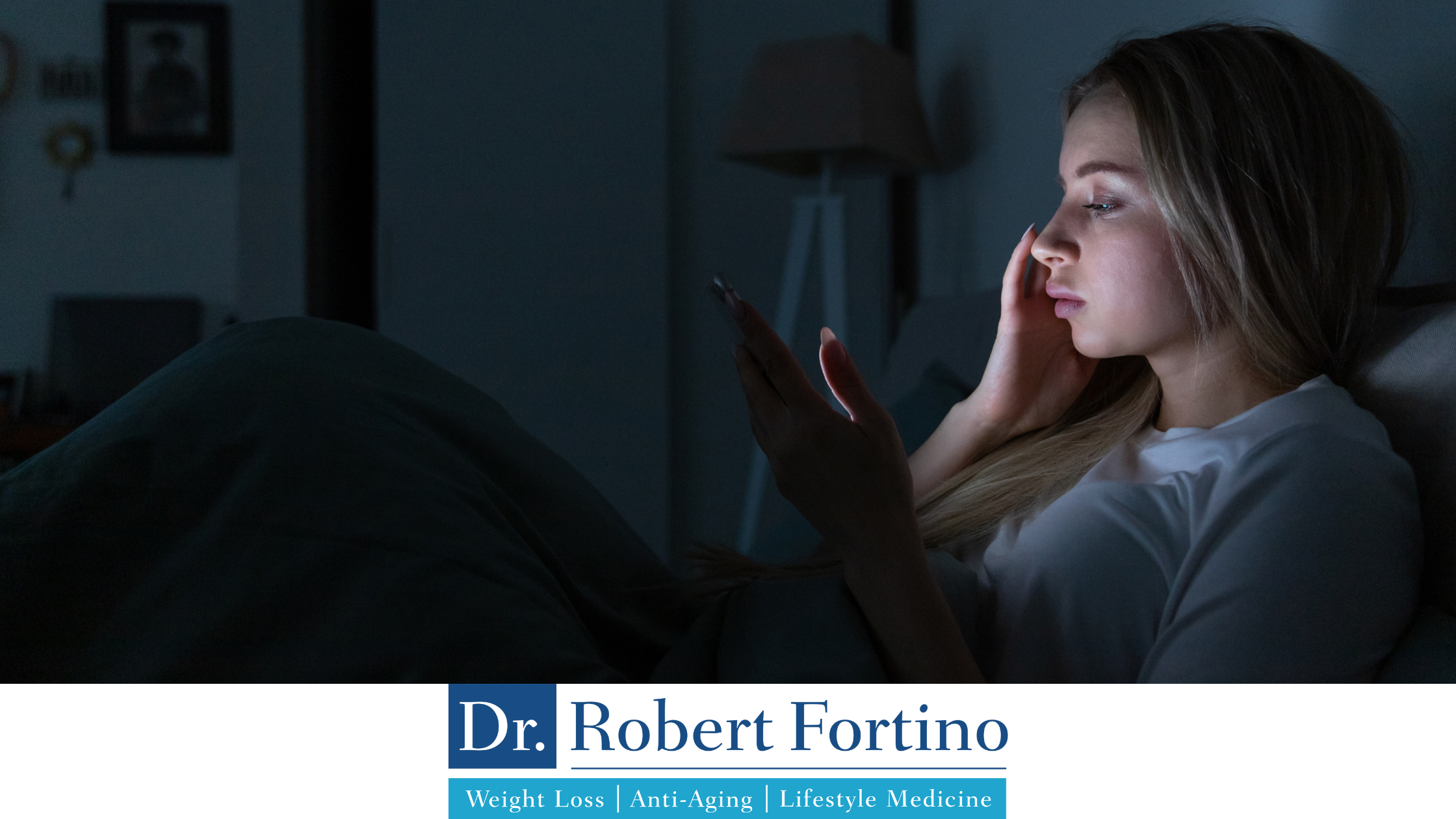
At our medical weight-loss and wellness clinics, we talk a lot about the connection between lifestyle, hormones, and energy. Most people don’t realize that one of the biggest disruptors isn’t food or stress—it’s light. More specifically, blue light from phones, computers, and TVs.
Blue light may seem harmless, but constant exposure—especially at night—can interfere with your hormone balance, metabolism, and sleep quality. The good news is that simple daily changes can help restore your body’s natural rhythm, improve rest, and even support weight-management results.
The Hidden Health Cost of Constant Screen Time
From work emails to social media, most of us spend more than eight hours a day in front of screens. During daylight hours, blue light helps us stay alert and productive. But at night, it sends the wrong signal to the brain—telling your body it’s still daytime.
When that happens, your brain delays the release of melatonin, the hormone that tells you it’s time to sleep. Over time, this can throw off your circadian rhythm, leaving you feeling tired, moody, and out of sync.
At Dr. Fortino’s office, we often see patients who feel fatigued and can’t seem to reset their energy, even with a healthy diet or exercise plan. Restoring quality sleep and hormone balance is usually the missing piece.
How Blue Light Disrupts Sleep and Hormone Balance
The pineal gland naturally releases melatonin in response to darkness. Blue light exposure in the evening can suppress this process by up to 50 percent, delaying sleep and shortening deep-rest cycles.
But melatonin isn’t the only hormone affected. Blue light also influences cortisol, insulin, and reproductive hormones. When these are disrupted, you might notice more stress, cravings, or weight fluctuations. Studies even show that nighttime exposure to blue light can reduce insulin sensitivity and interfere with metabolism—two key factors in maintaining a healthy weight.
The Mind and Body Impact of Blue Light
We often think of blue light as only a sleep issue, but it impacts the entire body. Mentally, constant screen time increases anxiety, distraction, and digital fatigue. Excessive screen use, especially social media, has been linked to depression and low mood, particularly in teens and young adults.
Physically, blue light contributes to eye strain, dryness, headaches, and blurred vision. Some research suggests long-term exposure may even affect the retina. Hormonal imbalances caused by poor sleep can also weaken your immune system, raise blood pressure, and make it harder to maintain a healthy weight.
Restoring Balance: Why Blocking Blue Light Matters
When patients begin limiting blue light exposure—especially a few hours before bed—their sleep and mood usually improve within days. Restored melatonin levels help the body fall asleep faster, stay asleep longer, and feel more refreshed in the morning.
Quality sleep also helps regulate cortisol, allowing the body to repair and recharge. Women often notice improved cycle regularity, while men report better energy and focus. Balanced hormones translate into more stable moods, stronger immunity, and a calmer, clearer mind.
Blue Light, Stress, and Mental Health
Mental-health professionals now view blue-light management as an important part of treating stress, anxiety, and insomnia. Constant digital stimulation keeps the brain alert when it should be winding down.
Turning off screens earlier in the evening allows your nervous system to reset and your thoughts to slow. Reducing social-media time—especially before bed—can lessen comparison stress and “FOMO.” Many patients tell us that reading, journaling, or practicing mindfulness before bed helps them relax more deeply and wake up in a better mood.
The Power of a Digital Detox for Better Sleep
Creating a “digital curfew” just one to two hours before bedtime can make a remarkable difference in how you sleep. Research shows that people who avoid screens before bed fall asleep about 20 minutes faster, enjoy longer deep sleep, and feel more alert the next day.
Better sleep supports hormone regulation, cognitive performance, and overall recovery. When your body gets the deep rest it needs, your metabolism, mood, and focus naturally follow.
Under the guidance of Dr. Robert Fortino and his highly trained staff of nurse practitioners, the patients gain a clear understanding of how daily habits—like light exposure—directly influence hormone balance, sleep quality, and weight-management success.
Simple Steps to Start Your Digital Detox
You don’t need to quit technology altogether—just learn to use it intentionally. Try starting with these small changes:
- Set a nightly screen curfew one to two hours before bed.
- Use night-mode or blue-light filters on your devices.
- Try blue-light-blocking glasses for evening use.
- Keep your bedroom screen-free and charge your phone outside the room.
- Follow the 20-20-20 rule: every 20 minutes, look 20 feet away for 20 seconds.
- Schedule tech-free moments during meals or short breaks.
- Try an occasional screen-free weekend to reset your energy and focus.
Small, consistent habits make the biggest difference.
Reclaiming Health in a Digital World
Technology is a wonderful tool, but it should serve you—not control you. Being intentional with how and when you use screens can help reset your hormones, restore healthy sleep, and improve your overall sense of balance.
At our medical weight loss clinics, we encourage patients to treat light exposure just like nutrition or exercise—it’s part of your total health plan. Even a few screen-free evenings each week can improve your sleep, reduce stress, and help you feel more focused and energized.
Your health isn’t just about what you eat or how you move—it’s also about how you rest, recharge, and disconnect. Give your mind and body that time, and you’ll notice the difference.